FREESTANDING SIGNS · SOUTHWEST FLORIDA
Monument & Pylon Signs
Monument and pylon signs are the freestanding structures that put your business in view from the road. From a low, welcoming sign at your entrance to a tall pole sign that stays visible from the highway, Core Sign Group designs, fabricates, permits, installs and maintains them for businesses across Southwest Florida, so you have one team from the first sketch to the final inspection.
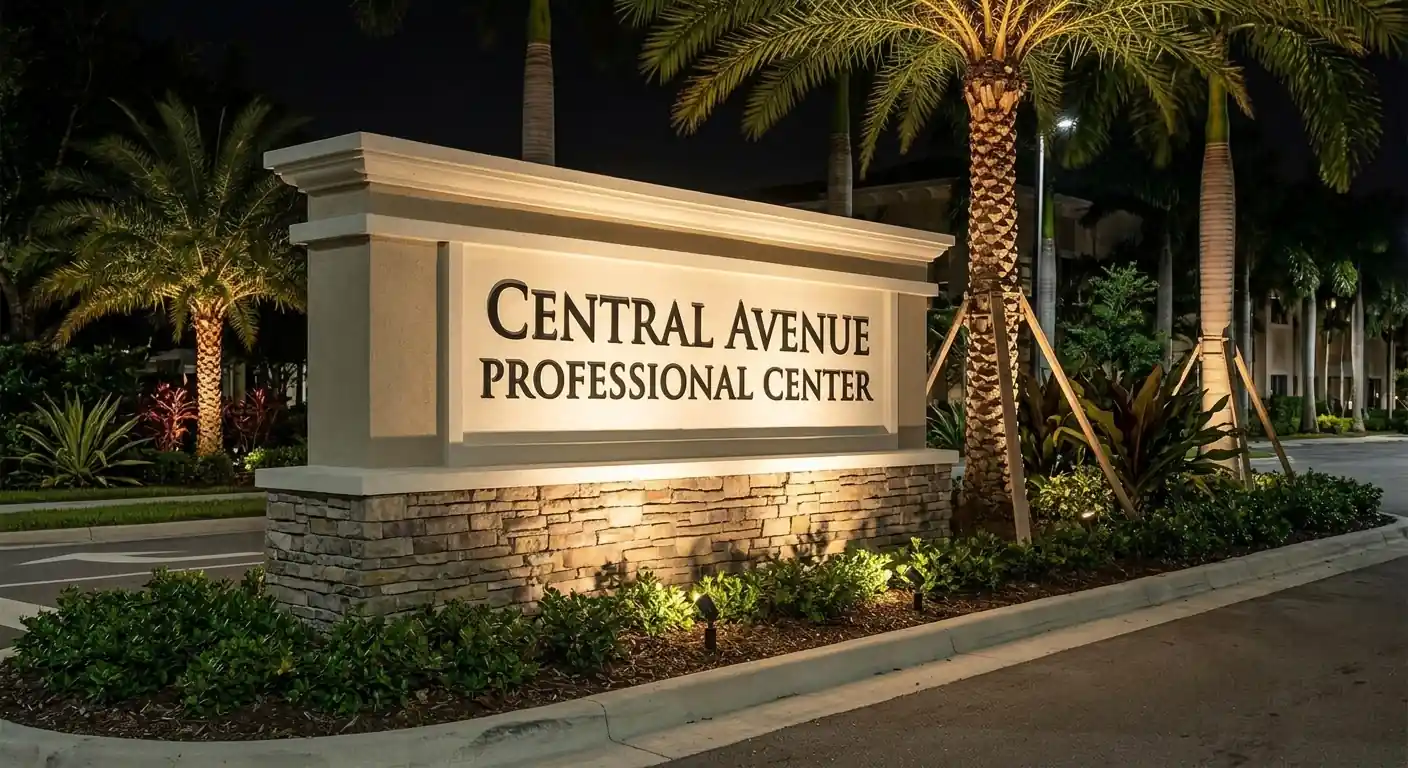
From a low entrance monument to a multi-tenant pylon at the road, we handle the engineering, the permit and the installation.
The Basics
What Are Monument and Pylon Signs?
Monument Sign
A low-profile freestanding sign that sits on or near the ground on a solid base, sitting low to the ground, with no visible support poles. Reads as established and upscale.
Pylon Sign
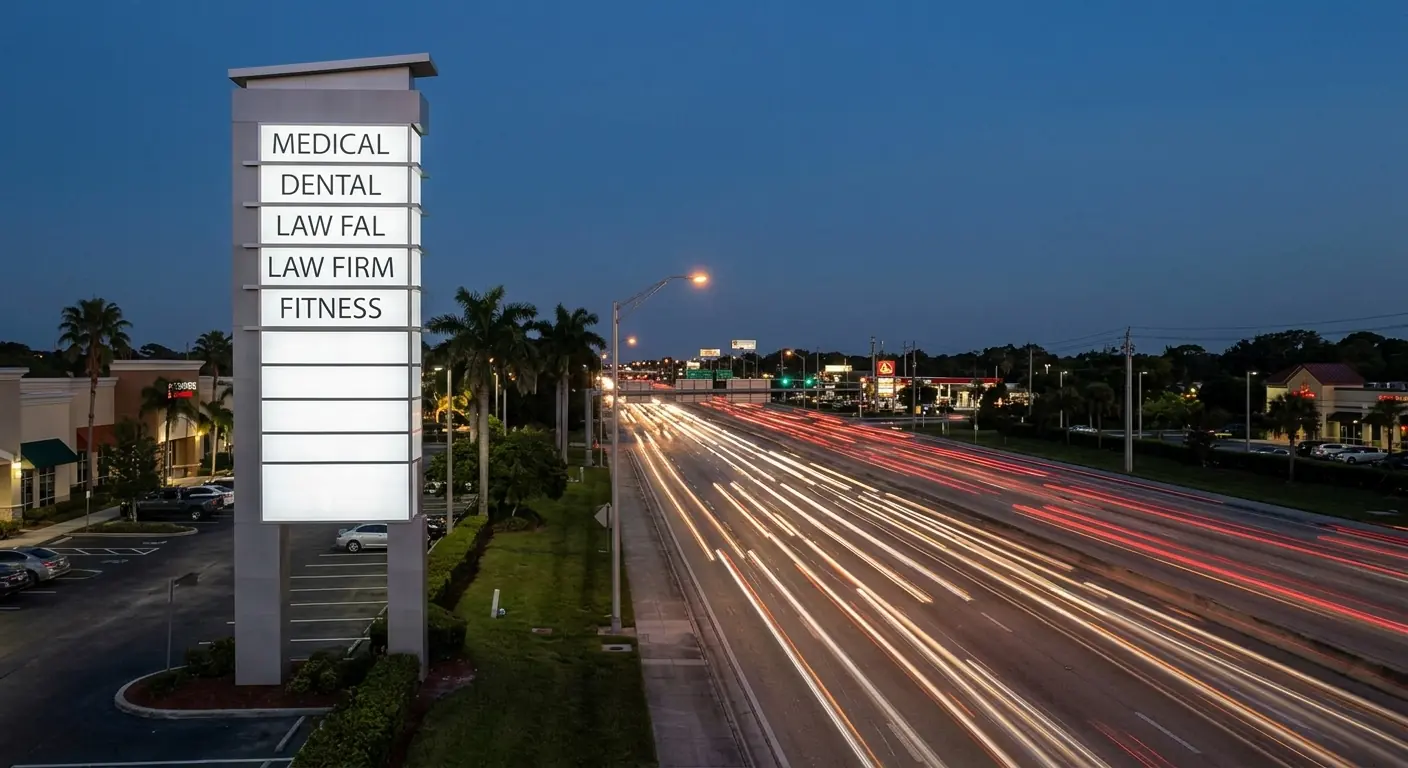
A tall freestanding sign mounted on one or two poles, typically 15 to 80 feet high, engineered to be read from a distance and at speed. Built for maximum visibility.
Both are permanent exterior signs, both can promote a single business or list multiple tenants, and both can be illuminated for round-the-clock visibility. The decision comes down to three things: how far away drivers need to see you, how fast they are moving, and the impression you want to make when they arrive.
Side by Side
Monument vs. Pylon Signs: Key Differences
Feature
Monument Sign
Pylon Sign
Height
Ground level
Elevated
Best viewing speed
5–35 mph (slow / walk-up)
40–75 mph (highway)
Ideal placement
Entrances, driveways, campuses
Highways, busy corridors, big lots
Impression
Established, upscale, local trust
High-visibility, impossible to miss
Structure
Solid base, no visible poles
One or two poles, often illuminated
Typical cost
Lower
Higher (steel and foundation work)
Permitting
Usually simpler
Often stricter (height limits)

Ground Level
Types of Monument Signs
- ■ Masonry or brick base: the classic upscale look, matched to your facade. Popular for banks, medical offices and gated communities.
- ■ Aluminum cabinet: a lighter, lower-cost cabinet that still reads as permanent and professional.
- ■ Illuminated: internal LED or external spotlights so your brand stays visible after dark.
- ■ Digital / EMC: an electronic message center built into the base for changeable messaging.
- ■ Multi-tenant: a directory-style face that lists several businesses at one entrance.
Elevated
Types of Pylon Signs
- ■ Single-pole mount: clean, cost-effective, common for standalone businesses.
- ■ Twin-pole mount: two poles for larger cabinets that need extra stability and wind resistance.
- ■ Covered-pole (architectural): the pole wrapped in aluminum or masonry so the structure feels architectural.
- ■ Multi-tenant pylon: stacked tenant panels for shopping centers and multi-business sites.
- ■ Digital / EMC pylon: a digital reader board for real-time messaging and pricing.
Match It to Your Site
Which Sign Is Right for Your Business?
The deciding factor is usually your building’s distance from the road. Close to a slow, walkable street or want a refined entrance for a professional office? A monument sign does the job and looks the part. Set back, hidden behind other structures, or fronting a highway where drivers pass at speed? A taller pylon sign may be the better option, depending on the site and what local sign rules allow.
Undersizing is one of the most common regrets, especially on roads where traffic moves quickly. We run a quick site review setback, speed limit, sight lines and local sign code before recommending a type, part of our outdoor signs work across Southwest Florida.
Permits, Zoning & Engineering
Freestanding signs are among the most heavily regulated signs a business can install. Cities cap height, setback, square footage and illumination, and pylon signs in particular often require signed and sealed structural drawings to prove the foundation and poles can handle local wind load. Getting this wrong means fines, forced removal or a sign that fails inspection.
We handle the full process code research, engineered drawings, application and inspection as part of our sign installation, so your project moves forward without surprises. Wind load matters most on tall pylon signs, where the foundation and steel are engineered to a specific rating for your area.
One Team, Start to Finish
The Core Sign Group Process
01
Design
We translate your brand and site into a sign design and mock it up on a photo of your location, as part of our sign design and creative step.
02
Fabrication
03
Permit & Install
04
Maintenance
Monument & Pylon Signs FAQ
What is a monument pylon sign?
“Monument pylon sign” is an umbrella term for freestanding, ground- or pole-mounted business signs, monument signs sit low on a solid base, while pylon signs are elevated on poles. Both display your business at the street and can be single- or double-sided and illuminated.
What is the difference between a monument sign and a pylon sign?
The main difference is height. Monument signs sit at ground level and are built for slow, close-up traffic; pylon signs are elevated and designed to be read from a distance and at speed. Allowable heights vary by jurisdiction, zoning district and property. Monument signs read as upscale and established, while pylon signs prioritize maximum visibility.
How tall can a pylon sign be?
Pylon signs typically range from about 15 to 80 feet, but the real ceiling is your local sign code. Cities set maximum height, and taller signs need engineered foundations rated for local wind load. We check the height limit for your address before designing.
How much do monument and pylon signs cost?
Pricing depends on height, size, illumination, materials, permitting and site work, and it varies enough between projects that published ranges are not a reliable guide. Send us the location and what you have in mind and we will put together a site-specific quote.
Do I need a permit for a monument or pylon sign?
Yes. Almost every city requires a permit for a freestanding sign, and pylon signs usually need sealed structural drawings as well. We handle code research, engineering and the permit application as part of the project so you stay compliant.
How long does it take to design and install a monument or pylon sign?
Most projects run several weeks to a few months, driven mostly by permitting and engineering rather than fabrication. Pylon signs take longer because of structural review and foundation work. We give you a realistic timeline once we know your city and design.